Ssh Generate Dsa Key Pair
Why?
Step One: Creation of the RSA Key Pair. The first step in the installation process is to create the key pair on the client machine, which would, more often than not, be your own system. Users need to use the following command: ssh-keygen -o -b 4096 -t rsa. The above command kicks off the SSH Key installation process for users. To generate a DSA key pair for version 2 of the SSH protocol, follow these steps: Generate a DSA key pair by typing the following at a shell prompt: $ ssh-keygen -t dsa Generating public/private dsa key pair. Configuring public key authentication with Bitvise SSH Client. Unless required for compatibility reasons, do not generate a DSA keypair. Only 1024-bit DSA keys are interoperable in SSH, and this key size is no longer considered adequate when using the DSA algorithm. Generate either an ECDSA keypair, or an RSA keypair of size 2048 bits.
SSH keys have numerous advantages over passwords
- Increased security: they are nearly impossible to brute force or guess
- Ease of management: Need access to a friend’s computer? Just send them yourpublic key. No more creating and changing random passwords.
- Type less passwords: You can use ssh-agent to cache your key, so you can usessh without typing your password every time
- Automated scripts: Because you don’t need to type your password every time,its easier to automate tasks that require ssh
How?
Linux/OS X (Short Version)
Run this command:
Accept the default location, and enter a secure passphrase that you (and onlyyou) will remember.
Email us the contents of ~/.ssh/id_rsa.pub
Generate Dsa Key Ssh-keygen
Linux/OS X (Detailed)
Use the
ssh-keygenutility to create your key. For a 2048 bit RSA key do:
For increased security you can make an even larger key with the -b option. Forexample, for 4096 bits do:
The OSL recommends using RSA over DSA because DSA keys are required to be only1024 bits.
- When prompted, you can press Enter to use the default location(
/home/your_username/.ssh/id_rsaon Linux, or/Users/your_username/.ssh/id_rsaon Mac) if you don’t already have a keyinstalled, or specify a custom location if you are creating a second key (orjust want to for whatever reason). - Enter a passphrase at the prompt. All people connecting to OSL servers mustuse a passphrase. This is just a password used to unlock your key. Ifsomeone else gets a copy of your private key they will be able to log in asyou on any account that uses that key, unless you specify a passphrase. If youspecify a passphrase they would need to know both your private key andyour passphrase to log in as you.
- After you re-enter your passphrase, ssh-keygen may print a little picturerepresenting your key ((you don’t need to worry about this now, but it ismeant as an easily recognizeable fingerprint of your key, so you could know ifit is changed without your knowledge - but it doesn’t seem to be widely used))then exit.
- Your private key should now be in the location you specified, and your publickey will be at that same location but with ‘.pub’ tacked onto the filename.
Note
Ssh Key Dsa Or Rsa
If you are creating this key for use with an OSL SSH account, copy and pastethe public key into your ticket. If we didn’t ask you for a public key but youwant one added to your account email it to support@osuosl.org, being sure tospecify who you are and what project(s) you are associated with.
- Or, to use the public key on a computer under your control, add it to
~/.ssh/authorized_keys(you can specify multiple public keys, one perline). - Never share your private key file, only the public key file.
Windows (using putty)
Ssh Generate Dsa Key Pair Chart
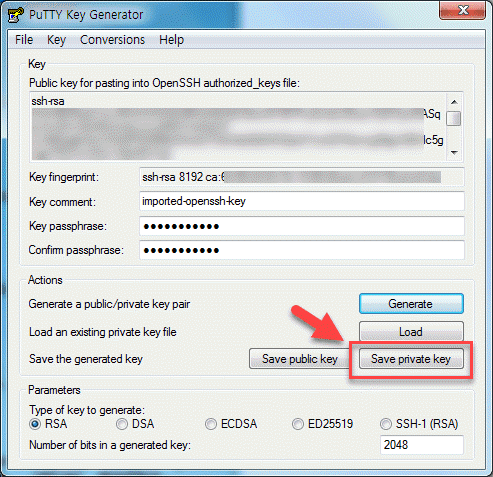
Great guide on setting up Filezilla with ssh keysDownload and start theputtygen.exe generator. /the-forest-key-generator-free-download.html.
- In the “Key” section choose SSH-2 RSA and press Generate.
- Move your mouse randomly in the small screen in order to generate the keypairs.
- Enter a key comment, which will identify the key (useful when you use severalSSH keys).
- Type in the passphrase and confirm it. The passphrase is used to protect yourkey. You will be asked for it when you connect via SSH.
- Click “Save private key” to save your private key.
- Click “Save public key” to save your public key.
Note
If you are creating this key for use with an OSL SSH account, copy and pastethe public key into your ticket. If we didn’t ask you for a public key but youwant one added to your account email it to support@osuosl.org, being sure tospecify who you are and what project(s) you are associated with.
Ssh Dsa
- keep your private key in a safe place
- when using putty go to connection->SSH->Auth and Browse to your private key